
Movie Theater Roofing
Movie Theater Roofing gets scoped from roof evidence, operating risk, Amarillo weather exposure, and the decision the building owner needs to make.
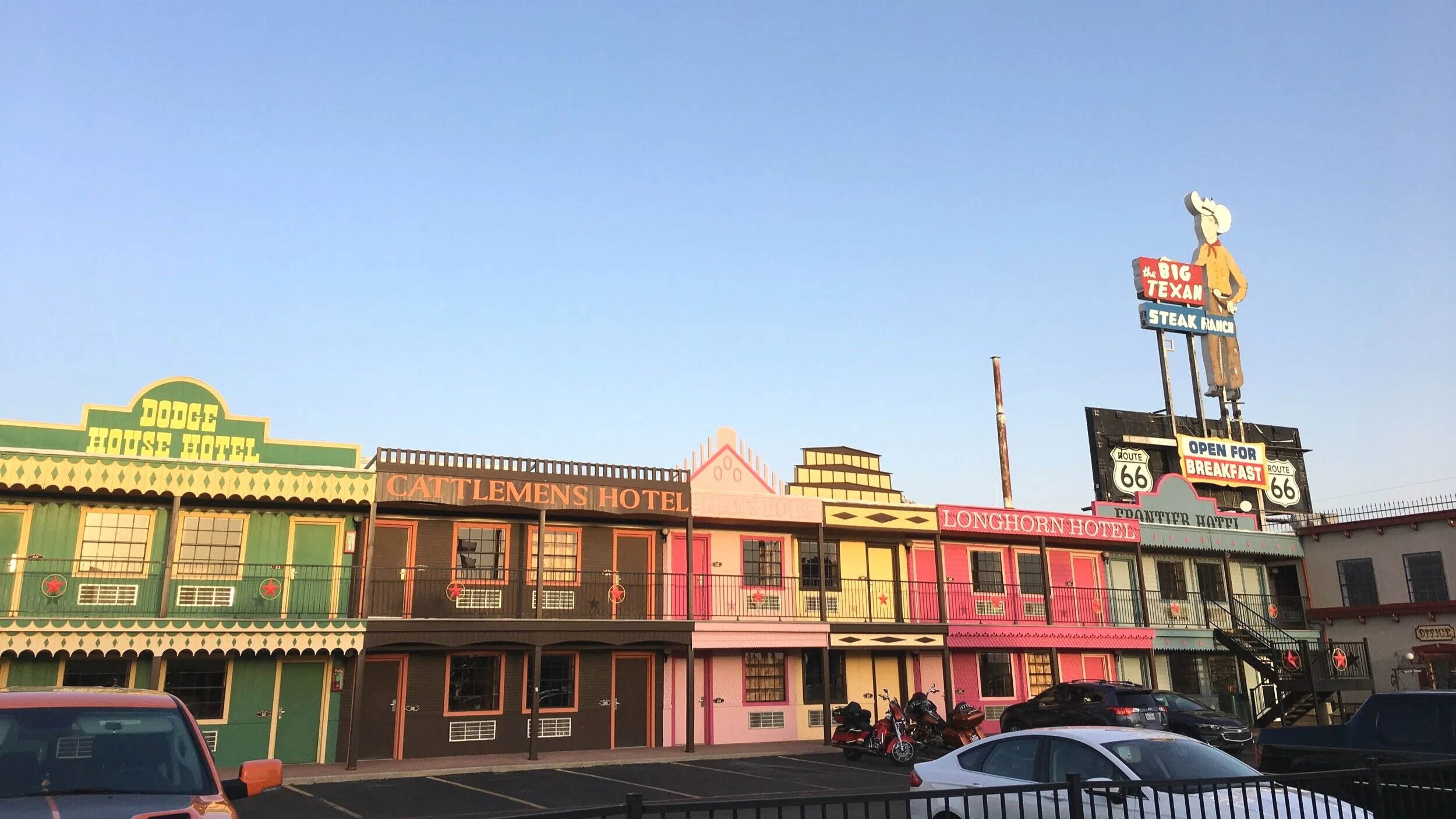
Movie Theater Roofing in Amarillo, TX

Big spans, dark rooms, and a roof you cannot inspect from inside
Amarillo's cinema buildings run from the modern multiplexes anchoring the I-40 and Soncy retail district near Westgate to entertainment venues along the Coulter and Georgia corridors, and downtown the restored Paramount Theatre on Polk Street still carries the city's older single-house tradition. Whatever the era, a theater poses two roofing problems most commercial buildings do not: the roof spans huge column-free rooms, and the rooms below are kept dark, so a leak can run for weeks before anyone in a seat ever notices a stain.
That combination shapes how we work on cinemas. The structure demands an attachment approach built for long spans, and the operation demands that we find and stop water before it ever shows up over an auditorium full of people.
Long-span decks behave differently
An eight- to twelve-screen multiplex carries roof spans of roughly 80 to 150 feet across each auditorium with no intermediate columns. Those long-span steel decks deflect and move under wind and snow load in ways a short-span retail roof does not, and a fastening pattern copied from a strip-center spec will not hold up. We confirm the deck type, rib depth, and gauge, run pull-out testing where the existing deck is older and shallow-rib, and choose mechanical, adhered, or hybrid attachment based on how that specific deck actually moves. On spans where concentrating fasteners at the seams is a problem, an adhered or hybrid assembly takes the point loads out of the equation.
Sound and insulation are part of the roof
A theater roof is also an acoustic and thermal barrier. It keeps the High Plains wind, hail drumming, and a passing thunderstorm out of the soundtrack, and it holds a comfortable temperature in a packed, dark room. When we recover or replace, we treat the insulation as performance, not filler, getting the assembly back to a continuous, well-detailed thermal layer and keeping the system tight enough that exterior noise and the building's own HVAC do not bleed into the auditorium. Cutting the insulation short to save a few dollars shows up as a colder lobby, a louder house, and higher energy bills.
A penetration field that rivals a hospital
Cinemas are HVAC-heavy. Each auditorium usually has its own rooftop unit, and on top of that you have concession exhaust, lobby heating vents, condensers for walk-in coolers and freezers, and increasingly the dedicated cooling for projection and server rooms. The penetration cluster on a modern multiplex is as dense as anything we see on a medical building. Every curb, duct, and conduit run gets flashed and documented individually before new membrane goes over it, because in a dark building those penetrations are exactly where an unnoticed leak starts.
Marquee, entry canopies, and the chronic leak spots
The marquee, signage supports, and entry canopies all penetrate or tie into the roof, and the canopy-to-building transition at the entrance is the single most common chronic leak we find on older Amarillo theaters. We treat those attachment points as individual flashing details and re-flash the entry transitions as part of the scope rather than leaving them to keep dripping into the lobby.
Working around showtimes
Theaters run afternoon through late night every day of the week, which makes scheduling closer to a 24-hour building than a 9-to-5 one. We sequence tear-off and dry-in so every section is watertight before the evening screenings begin, coordinate any HVAC shutdown needed for curb or penetration work into off-hours, and keep crews, equipment, and deliveries clear of the entrances and evening foot traffic. A sudden storm rolling off the caprock never lands on an open deck above a full house.
Let's look at the building
Send the building location, the membrane type if you know it, photos of any ceiling stains, and your daily showtime schedule. Whether it is a multiplex out by Westgate, an entertainment venue on the retail strip, or a historic house downtown, we will tell you whether the right move is a targeted repair, a recover with tapered insulation, or a full replacement engineered for those long auditorium spans.
Movie Theater Roofing Questions
Why do theater roofs need a different attachment approach?
Auditorium bays span 80 to 150 feet with no interior columns, and those long-span decks deflect under wind and snow far more than a short-span retail roof. We confirm the deck type, rib depth, and gauge, pull-test older decks, and choose mechanical, adhered, or hybrid attachment based on how that deck actually moves rather than a generic strip-center pattern.
Can a leak really go unnoticed in a cinema?
Yes, and it is one of the biggest risks here. The auditoriums are kept dark, so water can run for weeks before anyone spots a ceiling stain. That is why we flash and document every rooftop penetration individually and stay ahead of leaks with proactive inspection instead of waiting for a complaint from a seat.
Does the roof affect sound and comfort inside the auditorium?
It does. The roof assembly is an acoustic and thermal barrier that keeps wind, hail noise, and storms out of the soundtrack and holds temperature in a packed, dark room. We rebuild the insulation as continuous performance, not filler, so the house stays quiet, comfortable, and energy-efficient.
Our lobby leaks near the entrance. What causes that?
Usually the canopy-to-building transition at the entry, plus marquee and signage attachment points that penetrate the roof. That entry transition is the most common chronic leak we find on older Amarillo theaters. We treat each attachment as its own flashing detail and re-flash the entry transitions as part of the project.
Can you work without disrupting screenings?
Yes. We schedule around your showtimes, dry in every section before evening screenings start, move any required HVAC shutdowns to off-hours, and keep crews and deliveries clear of the entrances and evening foot traffic.
Start a conversation
Send the building location, roof type if known, leak photos, tenant restrictions, and the timing pressure. We will help turn the roof concern into a clear next step.
Contact Commercial Roofing of Amarillo