
Church and Religious Building Roofing
Church and Religious Building Roofing gets scoped from roof evidence, operating risk, Amarillo weather exposure, and the decision the building owner needs to make.
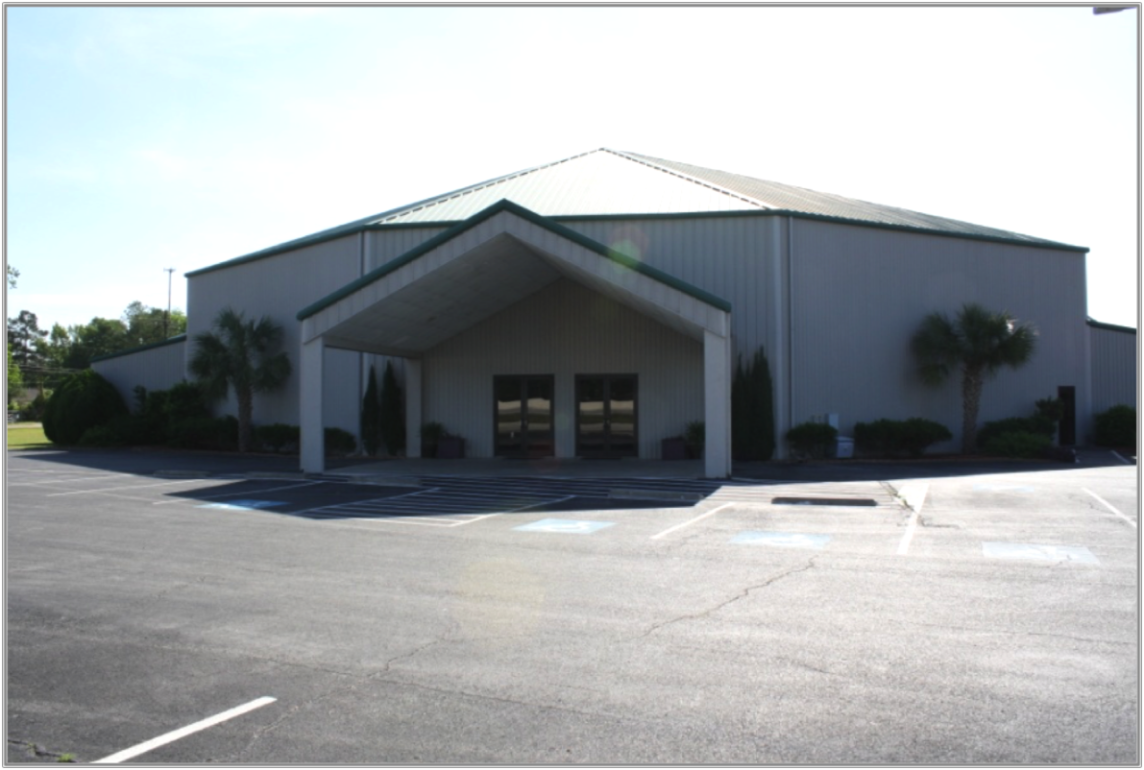
Church and Religious Building Roofing in Amarillo, TX

Georgia Street Church of Christ in Amarillo draws one of the largest weekly congregations in the Texas Panhandle, its broad sanctuary roof spanning an uninterrupted interior that seats more than a thousand worshippers on major observances. The Texas Panhandle's roofing environment is among the most demanding in the country for large clear-span structures: relentless wind, hail events that rank among the highest-frequency in the United States, wide thermal swings between summer days and winter nights, and a UV intensity at 3,600 feet of elevation that degrades exposed sealants faster than contractors from lower-elevation markets anticipate.
Hail is the defining weather risk for Amarillo church roofs. Potter and Randall Counties regularly experience hail events with stone diameters of one to two inches, and the Panhandle has recorded multiple storms in the past decade with stones exceeding three inches. A TPO or PVC single-ply membrane with standard 45-mil thickness will be compromised by large hail, while a 60-mil or 80-mil membrane offers meaningfully better resistance. Some Amarillo churches have moved to granule-surfaced modified bitumen cap sheets specifically because the granule layer absorbs hail impact energy that would otherwise puncture a smooth-surfaced membrane. Whatever system your committee selects, insist on impact resistance data from the manufacturer and correlate it with actual hail frequency data for Potter County.
Wind uplift on the Texas Panhandle is not an afterthought—it is the primary structural design consideration for any low-slope church roof in Amarillo. The city sits in one of the highest wind-exposure zones in the continental United States, and building codes in Texas require design wind speeds that translate to significant uplift pressures on large flat roof areas. Mechanically fastened or fully adhered membrane systems must be engineered to meet these uplift requirements, and the fastener pattern in field and perimeter zones must be calculated by a licensed engineer for buildings of church scale. Contractors who quote generic fastener patterns without engineering documentation are cutting corners that will cost the congregation when the next sustained wind event tests the installation.
Clear-span roof systems on large Amarillo churches are frequently steel deck over open-web joists, a construction type that performs well in the Panhandle's dry climate but presents specific re-roofing considerations. Thermal movement in long steel deck runs can be substantial, and the insulation attachment system must accommodate that movement without creating fastener back-out or insulation delamination. Tapered insulation systems are also worth specifying for Amarillo churches because the flat deck construction common to 1960s through 1990s sanctuary buildings often lacks the minimum slope required for positive drainage under today's codes.
Steeples and ornamental roof features on Amarillo's Baptist, Methodist, and Catholic churches have been tested by decades of Panhandle wind, and the results are often visible as deteriorated sealant beads, pulled-away metal flashing laps, and copper or aluminum that has oxidized unevenly where water stands at the base. A complete steeple assessment should be part of any re-roofing scope for Amarillo churches, because the cost to address steeple flashing while the contractor's lifts and scaffold are already on site is a fraction of what a separate mobilization would cost a year later when a new leak is traced back to the same defect.
Scheduling around the Amarillo church calendar typically means targeting the June and July window, when temperatures are high but wind events are somewhat less frequent than in the spring, and when most large congregations have reduced midweek programming. The important exception is Vacation Bible School, which many Amarillo churches run in late June. Confirm VBS dates with your facilities team before setting the construction schedule so that tear-off noise and debris management do not coincide with the busiest week of the summer for children's programming.
Capital campaign planning for Amarillo's large evangelical and mainline congregations is often complicated by the fact that major weather events—a hail storm that damages the roof, a wind event that pulls flashing—can create an urgent need for funding that doesn't fit the typical multi-year campaign timeline. Building committees would be wise to maintain a dedicated facilities reserve fund, separate from the operating budget, that accumulates contributions annually and can be deployed for emergency repairs or to bridge the gap while a capital campaign is organized. A reserve equal to two percent of the building's replacement value is a widely cited benchmark for commercial properties.
Texas building code, enforced at the local level in Amarillo through the City of Amarillo Development Services, requires permits for commercial roof replacements and mandates compliance with the adopted International Building Code wind uplift provisions. The Texas Department of Insurance has also published guidance on roof system specifications that affect policy renewability for commercial properties in high-hail-frequency zones like Potter County. Some insurers have begun requiring documentation of impact-resistant roofing systems as a condition of continued coverage—a requirement your committee should investigate before finalizing the specification to ensure the selected system qualifies for the insurer's preferred pricing tier.
Any roofing contractor bidding on an Amarillo church project should be able to demonstrate local project history in the Panhandle market, not just general commercial roofing experience. The combination of wind, hail, UV, and thermal cycling in this environment requires specific material knowledge and installation discipline that contractors from Houston or Dallas do not automatically possess. Request a list of completed church projects within 100 miles of Amarillo from the past five years, and contact those congregations directly before awarding a contract. The references most worth hearing are from building committees who have seen their new roof perform through at least two full years of Panhandle weather.
- How should we specify roofing for hail resistance in Amarillo?
- Specify a minimum 60-mil TPO or PVC membrane, or a granule-surfaced modified bitumen cap sheet, and require that the contractor provide manufacturer impact resistance test data correlated with FM 4473 or UL 2218 ratings. Class 4 impact resistance is the highest available rating and qualifies for premium discounts with many Texas commercial insurers.
- What wind speed should our new roof be designed for?
- Amarillo falls in a high-wind zone under the International Building Code. A licensed engineer should calculate the design wind pressure for your specific building height and exposure category. For most large church buildings in the Panhandle, the resulting fastener patterns in perimeter and corner zones will be significantly denser than interior field patterns.
- Can we get insurance discounts for upgrading to a more impact-resistant roof system?
- Yes. The Texas Department of Insurance has documented that Class 4 impact-resistant roofing systems can qualify for premium discounts of 15 to 35 percent on commercial property policies in high-hail-frequency zones. Contact your insurer before finalizing the specification to confirm which systems qualify and what documentation is required.
- How do we protect the congregation during construction given Amarillo's unpredictable weather?
- Require the contractor to provide daily weather monitoring and a written contingency plan for securing open roof areas if weather deteriorates. Tear-off should be limited to areas that can be fully dried-in within a single work day. Temporary waterproofing products should be staged on-site throughout the project for emergency use.
- What is the typical lifespan of a new church roof in the Texas Panhandle?
- A properly specified and installed system in Amarillo should last 20 to 25 years with regular maintenance, though hail events may create localized repair needs within that period. Annual post-storm inspections are essential for catching hail damage before it progresses to interior leaks.
Start a conversation
Send the building location, roof type if known, leak photos, tenant restrictions, and the timing pressure. We will help turn the roof concern into a clear next step.
Contact Commercial Roofing of Amarillo