
Self-Storage Facility Roofing
Self-Storage Facility Roofing gets scoped from roof evidence, operating risk, Amarillo weather exposure, and the decision the building owner needs to make.
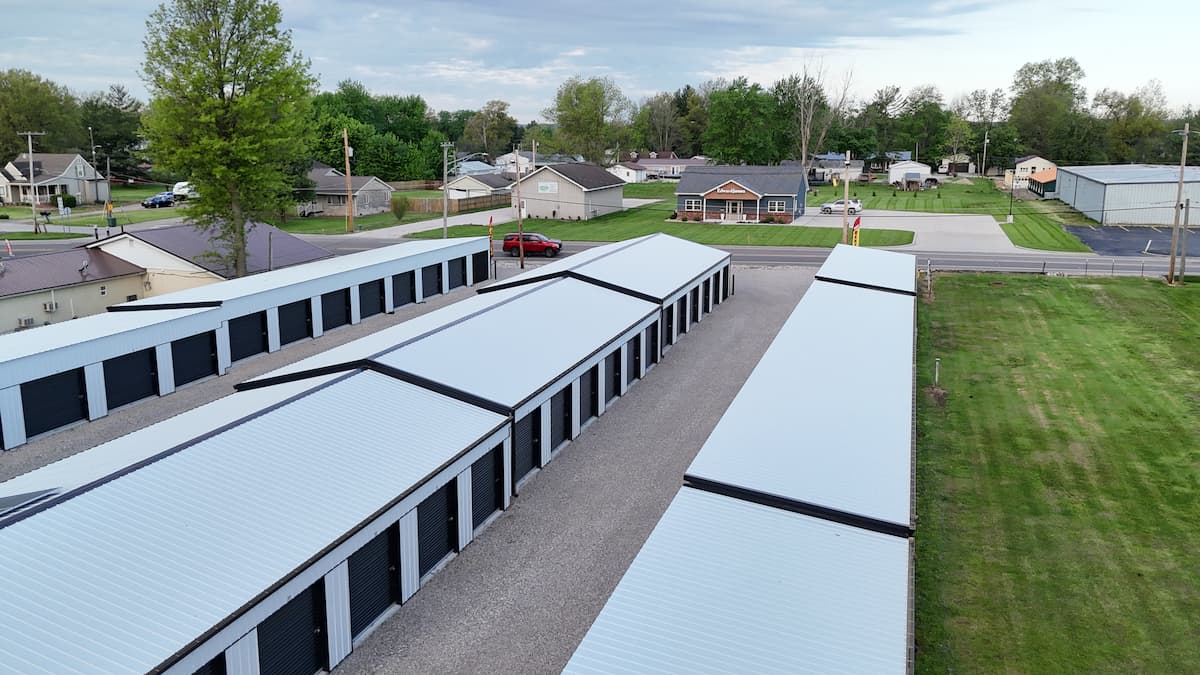
Self-Storage Facility Roofing in Amarillo, TX

Advantage Storage operates multiple self-storage facilities across Amarillo, Texas, with locations serving the Southwest neighborhood, the Bell Street corridor, and the rapidly growing loop areas. Amarillo's storage market has expanded significantly as the Texas Panhandle's agricultural and energy sectors generate both residential demand from workers relocating and commercial demand from contractors and equipment operators needing secure, accessible storage between jobs. Roofing these facilities in Amarillo requires understanding a climate that is unlike any other in Texas — high elevation, extreme winds, dramatic temperature swings, and a hailstorm frequency that makes property insurance a constant conversation.
Amarillo sits at nearly 3,600 feet elevation on the flat caprock plateau, exposed to prevailing winds from the southwest and northwest with no natural windbreaks. Wind is the dominant environmental stress on Amarillo roofing systems. A storage building with inadequate perimeter fastening can experience membrane billowing, edge metal uplift, and in severe cases, catastrophic roof failure during the spring and fall storm seasons when gusts regularly exceed 50 mph and occasionally top 80 mph. Commercial roofing contractors in the Panhandle specify enhanced perimeter and corner zone fastening patterns that exceed the standard requirements used in sheltered urban markets.
Hail damage is a defining feature of the Amarillo insurance landscape. Potter County and Randall County rank among the most hail-active counties in the United States, and self-storage operators deal with hail claims on buildings and contents regularly. When selecting roofing materials, Amarillo operators should discuss impact resistance ratings — Class 4 being the highest — with their roofing contractor. Some insurers now offer reduced commercial property premiums for buildings with UL 2218 Class 4 rated roof assemblies, which can partially offset the higher material cost of impact-resistant membranes or coatings.
Climate-controlled storage in Amarillo faces a demanding thermal environment. Summer afternoon temperatures reach 100°F or above, and winter nights can drop to single digits. The daily temperature swing in spring and fall often exceeds 40°F within a 24-hour period. Roofing insulation for climate-controlled buildings needs to be specified for this full range, and the membrane itself needs the dimensional stability to handle surface temperature swings that can reach 150°F on dark-colored surfaces in direct summer sun. This argues for TPO over darker membranes, both for thermal performance and for reducing the temperature differential stress on the assembly.
Drainage design for Amarillo storage campuses needs to account for intense, short-duration storms that drop significant precipitation quickly. The flat caprock topography means that water has nowhere to go other than through designed drainage systems or over property edges. Drain sizing based on Amarillo's 100-year storm intensity — which can exceed 4 inches per hour for short durations — is more conservative than national defaults that average conditions across many regions. Overflow scuppers positioned below the roof edge level provide a critical backup when primary drains are overwhelmed or clogged with debris.
Tenant belongings protection in Amarillo has a specific hail-related dimension. When a major hailstorm hits, storage facility managers face simultaneous requests from hundreds of tenants who want to access their units and verify their belongings are safe. If a roofing project is underway during storm season, the contractor's waterproofing protocols need to account for the possibility of a hail event interrupting work and requiring immediate emergency coverage of open sections. Experienced Amarillo commercial roofers keep emergency tarps and weighted ballast available on active storage campus projects during storm season.
Security penetrations on Amarillo storage facilities receive extra wind uplift scrutiny because the horizontal force of high winds on poorly sealed conduit entries can work flashings loose over time. Camera mounts on Amarillo storage buildings are also subject to vibration from sustained wind loading that can gradually work mechanical fasteners loose. Roofing contractors should use penetration flashings with positive mechanical securement rather than relying solely on adhesive sealants for conduit and camera mount bases on Panhandle facilities.
The economics of Amarillo storage roofing often favor complete tear-off and replacement over recover systems because the wind uplift requirements are more demanding with recover assemblies, which add weight but may not add proportional uplift resistance. A fresh installation on a cleaned and inspected deck allows the contractor to specify the full perimeter and corner fastening pattern required by local wind design standards without the complication of working over an existing membrane that may have different stiffness characteristics.
Texas does not have a statewide commercial roofing license requirement, which means Amarillo operators can receive bids from contractors with widely varying levels of experience and qualifications. The Texas Department of Insurance and the Texas Department of Licensing and Regulation do regulate certain aspects of roofing contractor conduct, but operators should independently verify that bidding contractors carry adequate general liability and workers' compensation insurance, have experience with wind uplift design in high-risk zones, and can provide references from comparable storage facility projects in the Panhandle region.
- What wind uplift standard should self-storage roofs meet in Amarillo?
- Amarillo falls in a high-wind zone under ASCE 7. Roofing systems should meet Factory Mutual (FM) uplift ratings appropriate for the building's exposure category, typically FM 1-90 or higher, with enhanced perimeter and corner zone fastening.
- Is a Class 4 impact-resistant roof worth the extra cost in Amarillo?
- Generally yes. Insurance premium reductions from some carriers partially offset the cost, and the reduced frequency of hail-related claims and repairs over the membrane's life improves the economics further. Get written quotes from your insurer before deciding.
- How are Amarillo's temperature swings managed in roofing assemblies?
- TPO with high-reflectivity surface reduces peak membrane temperatures. Polyiso insulation in multiple layers minimizes thermal bridging. Expansion accommodations at wall and curb terminations allow the membrane to move without splitting.
- What drainage design applies to Amarillo storage campuses?
- Size primary drains for the 10-year storm intensity and overflow scuppers for the 100-year storm. Amarillo's high-intensity summer thunderstorms can exceed national average rainfall rates significantly, so conservative sizing pays for itself quickly.
- Do Amarillo roofing contractors need a state license?
- Texas does not require a statewide commercial roofing license, but contractors must be properly insured and registered as a business entity. Always verify current general liability and workers' compensation certificates before signing a contract.
Start a conversation
Send the building location, roof type if known, leak photos, tenant restrictions, and the timing pressure. We will help turn the roof concern into a clear next step.
Contact Commercial Roofing of Amarillo