
Stadium & Arena Roofing
Stadium & Arena Roofing gets scoped from roof evidence, operating risk, Amarillo weather exposure, and the decision the building owner needs to make.
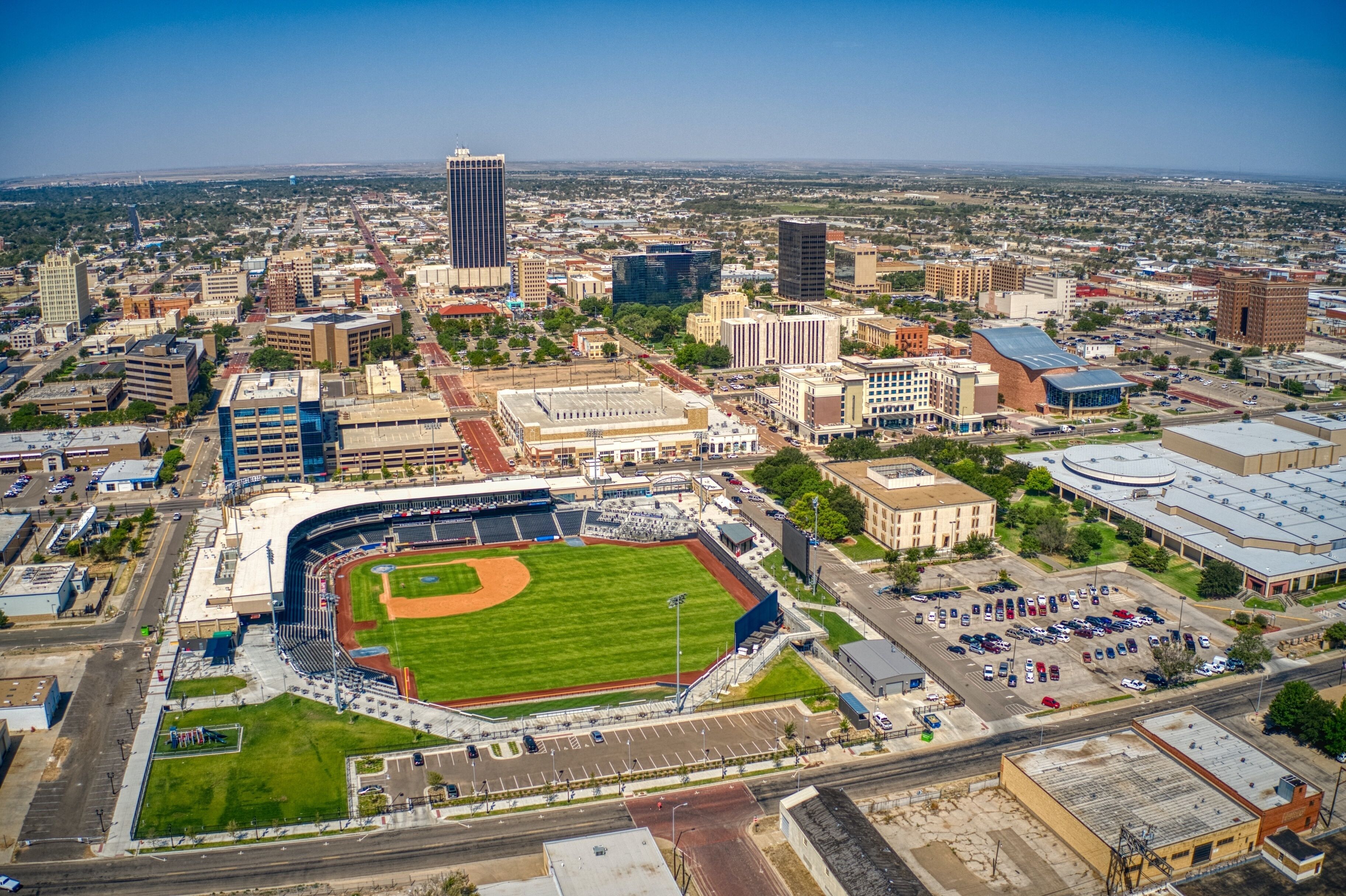
Stadium & Arena Roofing in Amarillo, TX

Long-span structural steel roof systems in Amarillo stadiums and arenas flex under load in ways that standard commercial buildings don't — and a membrane attachment design that ignores this deflection will fail at the seams before the first season is out. A 200-foot clear span generates mid-span deflection under snow and occupancy load that fatigues mechanically attached fasteners at predictable rates if the attachment pattern wasn't engineered to the specific span and deck characteristics. We review structural drawings and calculate deflection-adjusted attachment patterns before we write a specification — every time, for every stadium, regardless of how similar it looks to the last one.
Deck type is the first specification variable on a stadium roof in Amarillo. Steel decks with long-span profiles have different fastener pull-out values than standard 1.5-inch rib deck — and the difference isn't marginal. On a 20-gauge long-span steel deck, pull-out values can be 40% lower than standard deck, which changes the fastener spacing required to meet the jurisdiction's wind uplift design pressure. We pull-test every deck type before finalizing the fastener pattern. Specified pull-out values that don't match field-tested values are caught before installation — not during a post-installation uplift test.
The thermal expansion characteristics of a stadium roof are also distinct from standard commercial applications. A dark membrane over a large-span roof in Amarillo's climate will generate edge-to-edge thermal movement that exceeds what standard perimeter flashing details can accommodate over a 20-year service life. We design expansion accommodations at the base of seating bowl walls, at canopy-to-main-roof transitions, and at all parapet locations where thermal bridging concentrates movement. These aren't upgraded details — they're engineering requirements for the building type.
Stadium & Arena Roofing — Technical Questions
How do you account for long-span structural deflection in the attachment design?
We obtain the structural drawings and review the deflection calculations the engineer of record developed for the specific span. From those calculations, we determine the expected mid-span deflection under design load and adjust the fastener spacing and seam geometry to keep fastener stress within the manufacturer's fatigue-rated load range. For spans over 150 feet, we submit the attachment design to the structural engineer of record for review before specification is finalized.
What pull-out testing is required before specifying fastener density?
On any stadium or arena roof in Amarillo that uses mechanically attached membrane, we require field pull-out testing on the actual deck before finalizing the attachment schedule. Testing follows FM Global or ANSI/SPRI published test protocols. A minimum of 10 pull-out tests per deck zone is our standard — more if deck gauge or profile varies across the roof. Specified pull-out values are confirmed against field results before materials are ordered.
What membrane system is correct for a large-span stadium roof?
Most stadium re-roofing specifications in Amarillo use a mechanically attached 60-mil or 80-mil reinforced TPO or PVC membrane over tapered polyiso insulation. The heavier membrane weight reduces fatigue risk at seam locations under long-span deck movement. Ballasted systems are not appropriate for high-uplift stadium environments. Fully adhered systems require a deck that meets adhesive-application smoothness and pull-out requirements, which most long-span steel decks don't satisfy.
How do you design for thermal expansion at the roof perimeter on a large venue?
We design perimeter edge conditions with expansion accommodations at regular intervals — typically every 50-60 feet for standard membrane systems, closer for dark-colored membranes in high-solar-gain climates. Seating bowl wall base flashings receive expansion loop details that allow the membrane to move with the deck without fatiguing the flashing termination. These expansion details add cost but prevent the most common long-span stadium roof failure mode: flashing separation at the wall base.
How does the structural engineer of record coordinate with roofing on a stadium project?
For any stadium project in Amarillo where the new roof assembly adds load to the structure — additional insulation thickness, replacement of a lightweight ballasted system with a heavier assembly — we provide the proposed assembly weight to the structural engineer of record for load review before specification is finalized. We also provide our attachment design for deflection-span review. This coordination is documented in writing and included in the project's permit submittal.
Start a conversation
Send the building location, roof type if known, leak photos, tenant restrictions, and the timing pressure. We will help turn the roof concern into a clear next step.
Contact Commercial Roofing of Amarillo