
Industrial Roofing
Industrial Roofing gets scoped from roof evidence, operating risk, Amarillo weather exposure, and the decision the building owner needs to make.
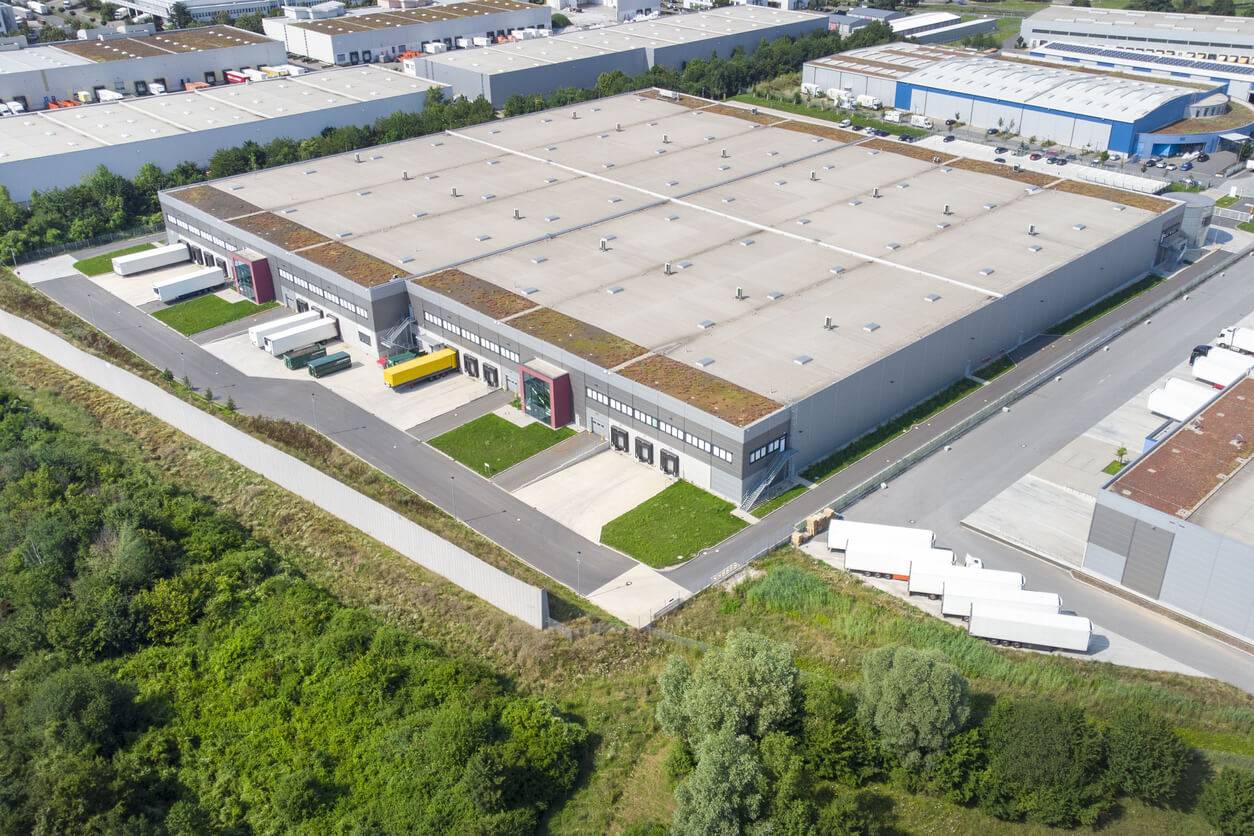
Industrial Roofing in Amarillo, TX

Industrial roofing on the Texas Panhandle is a discipline defined by wind, hail, and the brutal combination of the two. Amarillo sits in the middle of the Southern Plains at roughly 3,600 feet — high enough for meaningful UV exposure, exposed enough for sustained winds that average 14 mph year-round and gust to 50 mph or more during spring storm systems. When you add a hail season that drops stones anywhere from pea-sized to baseball-sized on industrial rooftops across the region, you have a roofing environment that is unforgiving of marginal specifications and sloppy installation. We've been working in this market long enough to know exactly what those conditions demand.
The BNSF Railway's major intermodal hub in Amarillo is one of the largest rail logistics operations in the Texas Panhandle, and the industrial buildings that support that hub — transfer facilities, equipment maintenance buildings, locomotive service structures — represent some of the most operationally sensitive roofing work we do in this market. Downtime on a rail facility is measured in cost per hour, and roof work has to be coordinated around active track and equipment operations. We approach BNSF-adjacent work with detailed pre-job planning, phased work sections that maintain dry areas at all times, and material staging that doesn't interfere with vehicle and equipment movement on the facility grounds.
Pantex, the nation's primary nuclear weapons assembly and disassembly facility located northeast of Amarillo, represents the most security-intensive roofing environment in the region. Access requires federal background clearance, and work on Pantex structures is governed by Department of Energy standards that go well beyond standard commercial roofing specifications. We maintain the necessary clearances and understand the documentation, material approval, and inspection protocols that DOE facility work requires. The buildings on that campus run from Cold War-era concrete structures to modern administrative and technical facilities, and the roof systems reflect that range — but the security and quality documentation requirements are consistent across all of them.
The I-40 logistics corridor through Amarillo carries some of the highest truck traffic in the United States, and the distribution and warehousing facilities that have grown up along that corridor over the past two decades represent the largest single category of industrial roofing work we do. Tyson Foods' beef processing operation is one of the largest employers and one of the largest single-facility roofing footprints in the city. Food processing facilities have specific roofing considerations: interior humidity from processing operations, condensation management, and the requirement that roofing materials and processes not introduce contaminants that could affect production. We work within those constraints as a standard part of how we specify and execute food processing facility jobs.
Hail is the number one driver of emergency and insurance-related roofing work in the Amarillo market. The Texas Panhandle sits squarely in Hail Alley, and significant hail events — 1.5 inches and larger — occur multiple times per year. On industrial buildings, hail damage manifests as membrane bruising and puncture on softer TPO and EPDM systems, granule loss on modified bitumen surfaces, and metal panel denting on standing seam and exposed-fastener metal roofs. We respond to post-storm inspections quickly, document damage thoroughly for insurance purposes, and distinguish between cosmetic impact marks and functional damage that compromises waterproofing — a distinction that matters enormously in the insurance claim process.
For new industrial construction and re-roofing in Amarillo, our primary specification for hail-prone areas is 60-mil or 80-mil TPO with enhanced hail resistance ratings, or two-ply modified bitumen with granule-surfaced cap sheets. In high-wind zones, we specify fully adhered or heavily fastened mechanically attached systems — in an environment with sustained 14 mph winds and frequent gusts well above that, edge metal specification and termination details are not places to economize. We use heavy-gauge gravel stops and copings with concealed cleat attachment, and we install wind uplift mitigation at perimeter zones that exceeds code minimum in areas with known exposure.
The Don Millican Amarillo International Airport industrial area has grown significantly as the city's role as a regional logistics hub has expanded. The industrial park on the airport's south side houses a mix of aviation support facilities, regional distribution operations, and light manufacturing. These buildings face the same wind and hail exposure as everything else in Amarillo, with the additional consideration that airport proximity creates restrictions on certain types of rooftop equipment and requires coordination with the airport authority for any crane operations near flight paths. We've established the working relationships with airport operations that make those coordination pieces routine rather than problematic.
Winter ice on Amarillo industrial roofs is a less frequent but serious concern. The Panhandle can go months without a significant freeze event, but when winter precipitation arrives with temperatures near or below freezing, the combination of wind and moisture creates ice accumulation on rooftop drains and scuppers that can back water up under a membrane in hours. We install self-regulating heat tape on primary drains and scuppers for clients who want to manage that risk proactively, and we include drain inspection and clearing as part of every fall maintenance visit. Ice damming in this climate is different from mountain or Great Lakes markets — it's less frequent but can be more dramatic when it happens because facilities are less prepared for it.
Maintenance scheduling in Amarillo follows a weather-awareness calendar. Spring inspection after hail season — typically June — documents any storm damage and addresses it before summer heat cycles stress the membrane further. Fall inspection in October addresses any drainage concerns before winter and confirms that any prior repairs have held. For food processing and heavy industrial facilities, we recommend quarterly visits because the combination of interior humidity, exhaust penetrations, and operational vibration accelerates wear at penetrations and flashings in ways that annual inspection won't catch in time. The cost of a quarterly inspection program is trivial compared to a single interior damage event in a food processing or manufacturing environment.
Amarillo's industrial base is more diverse than the city's reputation suggests — beyond agriculture and transportation, the Panhandle has significant energy sector infrastructure, a growing logistics presence driven by I-40, and specialized manufacturing facilities that demand roofing expertise beyond the standard warehouse specification. We bring that expertise to every project we take on in this market, whether it's a 50,000-square-foot manufacturing facility on the southwest side or a multi-building logistics campus along the interstate. The conditions here demand it, and the building owners who keep their industrial facilities operating profitably know that a properly specified and installed roof is a business continuity decision, not just a maintenance line item.
Questions Owners Ask
How do we know if our roof sustained functional damage after a hail storm versus just cosmetic impact marks?
The distinction matters for both insurance and for the actual performance of your roof. Cosmetic impact marks on TPO or PVC — small depressions without membrane penetration — don't compromise waterproofing immediately, though they can accelerate UV degradation at the impact point over time. Functional damage is when the membrane is punctured, when granules on modified bitumen are knocked free and the mat is exposed, or when metal components are distorted enough to break seals or create water pathways. We document both types with photos and measurements during post-storm inspections. Insurance adjusters in hail-prone markets have seen the full range of damage types, and a detailed, honest inspection report from a credentialed roofing contractor is the foundation of a successful claim.
What wind uplift rating should we require for a new industrial building on the I-40 corridor?
Amarillo falls in a high-wind design zone under the building code, and industrial buildings along the I-40 corridor have limited terrain shielding — the flat topography means there's nothing to break the wind before it hits your building. For new construction, we specify FM-rated or ANSI/SPRI-rated assemblies with field zone, perimeter zone, and corner zone pull-out resistance values that exceed the local design wind pressure requirements — and we design the fastening pattern for each zone specifically rather than applying a single field-zone fastening density everywhere. For mechanically attached systems, that means significantly increased fastener rows in the perimeter and corner zones. For fully adhered systems, we verify that the adhesive coverage and flash time are appropriate for the site conditions on the day of installation.
Our food processing facility has significant interior moisture from production. How does that affect our roof specification?
Interior moisture is a major factor in roofing specifications for any food processing facility, and Tyson-type beef processing operations are among the most demanding in this regard. Warm, humid interior air will migrate upward through the roof assembly by vapor diffusion, and without a proper vapor retarder at the correct location in the assembly, that moisture can condense within the insulation and create wet insulation, deck corrosion, and mold conditions. For processing facilities, we specify a vapor retarder on the interior (warm) side of the insulation as a standard component of the assembly, not an optional upgrade. We also pay careful attention to exhaust penetration details, because those are the high-flow moisture pathways that bypasses the vapor retarder entirely if they aren't detailed correctly.
How far out do you typically schedule post-storm emergency inspections after a significant Panhandle hail event?
After a major hail event affecting the Amarillo metro, we prioritize emergency inspection scheduling based on known functional damage — active leaks, visible punctures, large impact concentrations. Buildings with active leaks get same-day or next-day emergency response. For general post-storm inspection without active leaks, we typically schedule within 5–10 business days after a significant event, depending on the number of buildings affected. We triage by building type and risk level — food processing and manufacturing with sensitive interiors move to the front of the queue ahead of empty warehouses. We recommend that building owners contact us immediately after any hail event, even without visible damage, so we can document timing and condition before storm-chasing contractors begin offering unsolicited assessments.
What should we budget for annual roof maintenance on a 200,000-square-foot industrial building in Amarillo?
A realistic annual maintenance budget for a 200,000-square-foot industrial building in this market runs from $8,000 to $18,000 depending on roof age, system type, and how many penetrations and rooftop equipment items require annual flashing inspection. That range covers two annual inspection visits with written condition reports, minor flashing and sealant repairs identified during those inspections, drain clearing and inspection, and emergency response coverage for storm events. Buildings with older roofing systems or high rooftop equipment density sit at the higher end of that range. Compare that maintenance investment against the cost of a single interior water damage event in a production facility — maintenance nearly always wins on an ROI basis.
Start a conversation
Send the building location, roof type if known, leak photos, tenant restrictions, and the timing pressure. We will help turn the roof concern into a clear next step.
Contact Commercial Roofing of Amarillo